
WOMEN OF THE ROW
STROLL DOWN SAVILE ROW TO CELEBRATE THE WOMEN MAKING A STATEMENT ON LONDON’S MOST SARTORIAL STREET

نشر قبل 426 أيام
12 دقيقة قراءة
Traditionally, Savile Row has been synonymous with highly-regulated, masculine elegance, but now, a new generation of tailors redefines who gets to wear the suit.
DAISY KNATCHBULL, KNATCHBULL
Offering “exactly the same service that Savile Row is known for – craftsmanship, quality and a deeply personal experience”, designer and founder Daisy Knatchbull describes her role on Savile Row as “modernising and opening up”. Whether scouring London for new materials or visiting clients in their homes, Knatchbull’s acutely focused attention ensures each piece remains as distinctive as its owner. With a completely female team of tailors, who take into account the most personal of factors (from career aspirations to weight fluctuation to menstrual cycles), Knatchbull stands out from the rest of the Row not just in its gender inclusivity, but its quest to translate the full female experience into clothing.
Founded in 2019 as The Deck – an ode to its starting with an initial offering of four made-to-measure styles – the brand has experienced phenomenal growth in the past six years. As its vision and reach evolved, the concept behind the name no longer felt befitting of its current position or direction, leading to its rebranding as Knatchbull. An Old English surname meaning “knock out the bull”, it encapsulates some of the founder’s fearlessness: she was the first woman to wear a top hat and tails to Royal Ascot, prompting organisers to change their long-standing dress code restricting women to dresses and skirts.
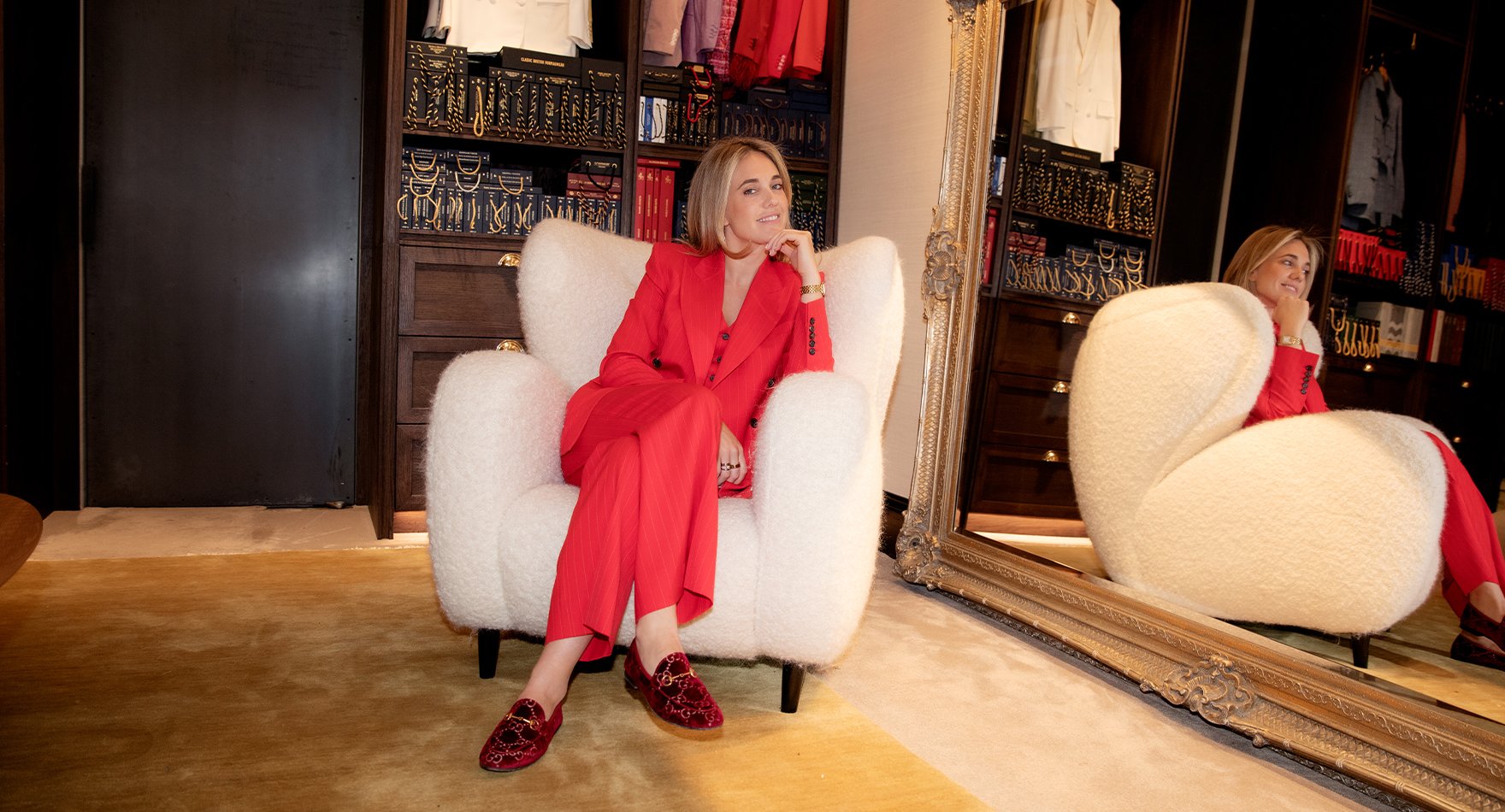
Even as she breaks with tradition, Knatchbull is confident in preserving Savile Row’s status quo of, in her words, “exceptional craftsmanship, personalised service and empowering experience”. Resolute in conserving its historical reputation for excellence, Knatchbull’s approach balances the traditional craft of tailoring against a push for more modern and relevant silhouettes. Her latest collection is formed from soft pink linens and structured Gabardine denims, combining traditional British tailoring with contemporary design. Interpreting classic silhouettes through a female lens, her designs rethink tailoring’s association with strict cuts and modest utility, instead guided by the principle that a suit can and should be “sexy”, with her ready-to-wear collection ranging from satin skirt co-ords to peplum bustiers and lace camisoles.
Knatchbull embraces the erotics of designing within her tailoring philosophy, empowering women through enhancing, rather than masculinising, femininity. Her commitment to inclusivity and dynamism brings to Savile Row an elevated aura of modernity, “pushing the boundaries of what Savile Row represents, giving women a space to feel welcome and heard”. It’s this championing of communication that makes Knatchbull stand out as a brand intent on investigating the full spectrum of contemporary womanhood, and turning it to bold, beautiful design.
RUBY SLEVIN, BANSHEE OF SAVILE ROW
Ruby Slevin’s first-ever collection was inspired by a vision. “In my mind, I saw this incredible, powerful woman storming the Irish mountains, wearing a long tweed coat,” Slevin says, “and from then, she was in my head.” This figure gave the collection its name, “The Banshee Wind”, as well as its sense of drama: high starched collars, sweeping long coats and crushed velvet, worn with fingerless gloves. Banshee translates from the Irish bhean sí, which means “fairy woman”: a mystic figure who could take the form of the triple goddess, a triad representing the maiden, the mother and the crone – or, as Slevin prefers, “the matriarch”. The banshee is commanding but fluid. Slevin saw in her a figure who encapsulates the dignity, autonomy and difference of each stage of life, as well as each woman’s holding of all those states within herself. “The banshee’s power is that she can move between worlds,” Slevin explains, “And combining that free femininity with something as structured as Savile Row is beautiful.”
Banshee of Savile Row was established in 2019, just months before a global pandemic sent all the street’s shutters clanging down. It not only survived but has flourished. Six years on, Slevin’s coterie of regular clients keeps the business growing, taking on new bespoke orders and stepping into new spheres: in 2022, Banshee of Savile Row became the first bespoke women’s tailor on Savile Row to show at London Fashion Week.
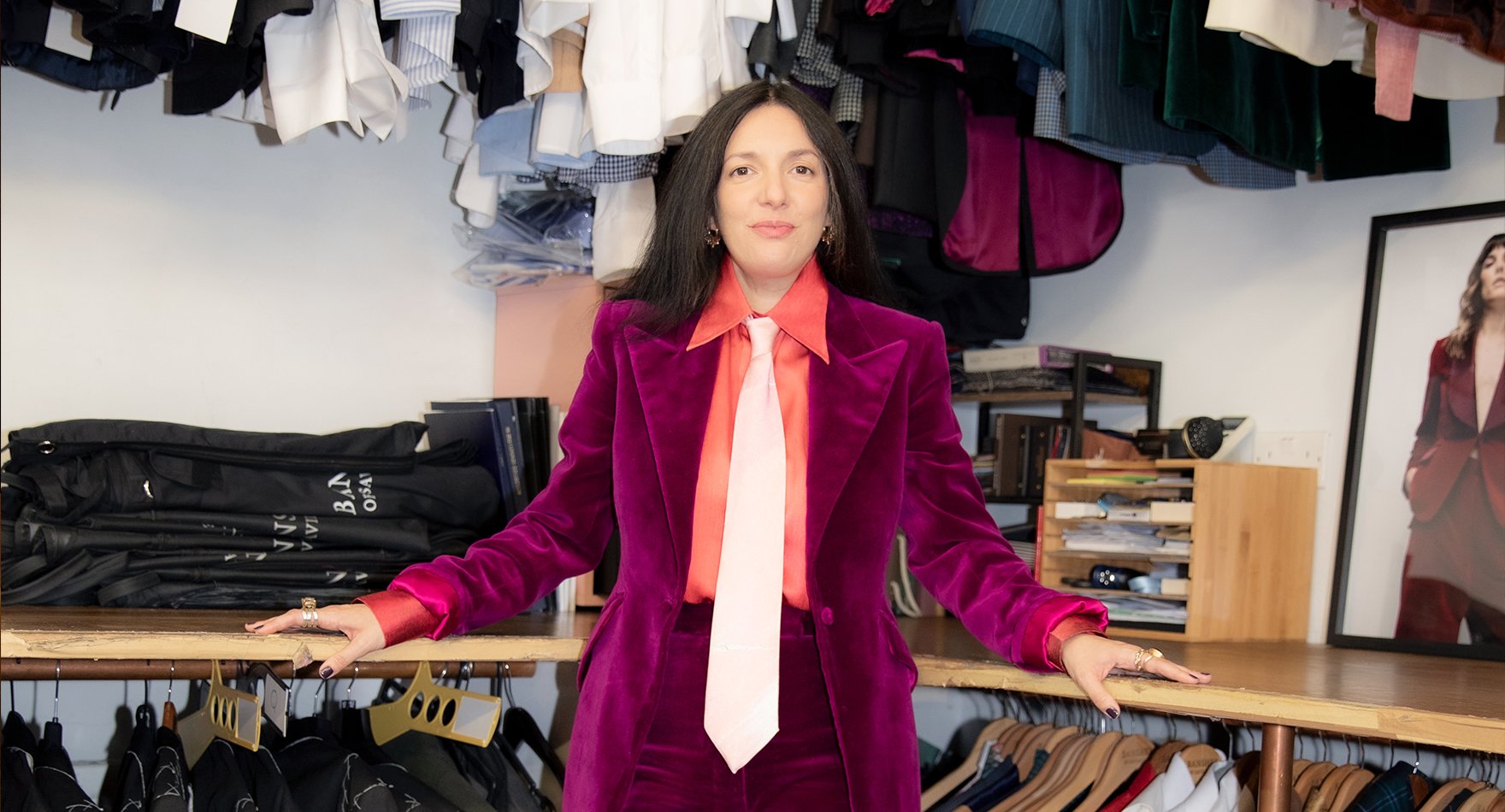
It’s a brand with a clear sense of identity. As Slevin says, “Many clients come in and I think, you’re a Banshee woman. A lot of them work in the arts, music, fashion or film, but even the women who work corporate jobs tend to be creative in themselves.” Slevin herself took a roundabout route to the Row. Her first degree was in economics and sociology, and her early career saw her working in an investment company in Melbourne. She joined a clothing exchange in the city, and the first seeds were planted. When she returned to Ireland to work in renewable energy, she asked a designer friend to set up a sewing class and began creating. “I just couldn’t get enough of it,” she says, “So I took the money saved up from working and went back to college to do fashion design – but I only wanted to work with Irish tweeds, Irish linens. At the time, it was more fashionable to be using modern fabrics, but I was interested in the history and the heritage.”
During her degree, Slevin travelled around Ireland seeking out forgotten cloth types in forgotten places. This was where she first seriously encountered the idea of Savile Row. “I met an incredible man called Gareth Brown,” she explains, “who had a beautiful wardrobe of Irish tweeds from Connemara that are now extinct. He’d buy beautiful embroidered silk in India, and take it to Savile Row.” Another fortuitous connection came when she met James Sleater, of Cad & the Dandy. “He said look, whenever you finish, come and work for me,” Slevin says. “I moved over to London on a Tuesday, and on Wednesday, I was working on Savile Row.”
This background – threaded through with interests in heritage, history, materiality, and sustainability – has informed Banshee of Savile Row at every touch point. Most recently, this has been in the form of artistic collaboration: a “call and response” between Slevin and artist Eleanor Ekserdjian. As Slevin says, “I gave her little swatches of hand-woven Donegal tweed, and Irish linen, which she took to a Hauser & Wirth residency in Scotland last year, where the landscape is similar to Ireland’s. She created these tiny jewel-like paintings, and then I turned them into silk prints from which we’ve made silk shirts, ties, bow ties, pocket squares. They’re deliberately dandy-ish Savile Row pieces, but coming from the point of view of pure art.” Heritage-rich materials meet landscapes meet art – that’s the deeply contemporary folk story that Slevin is telling.
Dasy Knatchbull and Ruby Slevin photographed by Freddie Payne.


