
A STITCH IN TIME
KAMILAH AHMED, THE BRITISH BANGLADESHI TEXTILE ARTIST, BRINGS ANCIENT EMBROIDERY CRAFT INTO CONTEMPORARY CONTEXTS

Published 59 days ago
12 min read
Kamilah Ahmed, the British Bangladeshi textile artist, brings ancient embroidery craft into contemporary contexts. Beginning her career in couture, Ahmed’s work now shapes and furnishes interior spaces, reflecting a commitment to slow process and the beauty of tradition.
TEXTILES ARE DEEPLY CONNECTED TO DOMESTIC MEMORY AND INTERGENERATIONAL CARE.HOW DOES YOUR RELATIONSHIP TO HOME INFLUENCE THE INTIMATE SPACES YOU CREATE FOROTHERS?
It definitely does, but not in a nostalgic way. I’m interested in textiles as carriers of knowledge, particularly practices like Jamdani or aari embroidery, where skill is transmitted across generations by hand. There is care embedded in repetition and duration, and that rhythm is something I carry into my own work. For me, home is layered between experience and inherited memory: I remember my aunties bringing back textiles from trips to Dhaka for Eid, and how attentive I was to those materials. I have vivid memories of these really old, classical-style, folk woodblock-printed sarees stacked in my mother’s cupboard, which my auntie gave her when she married my father. There was also a lot of kantha stitched embroidery that tended to be in the living room, where you’d welcome guests. Nakshi kanthawas common too, another traditional Bangladeshi folk embroidery depicting scenes of everyday life and community. I’m conscious of how these histories have been disrupted through colonial trade, industrialisation, and shifts in value, so the work sits in the tension between honouring lineage while insisting that these practices move. They are living, evolving and deserving of their place within luxury contemporary contexts, whether that’s the intimacy of the home, couture, or in a grand hotel lobby.
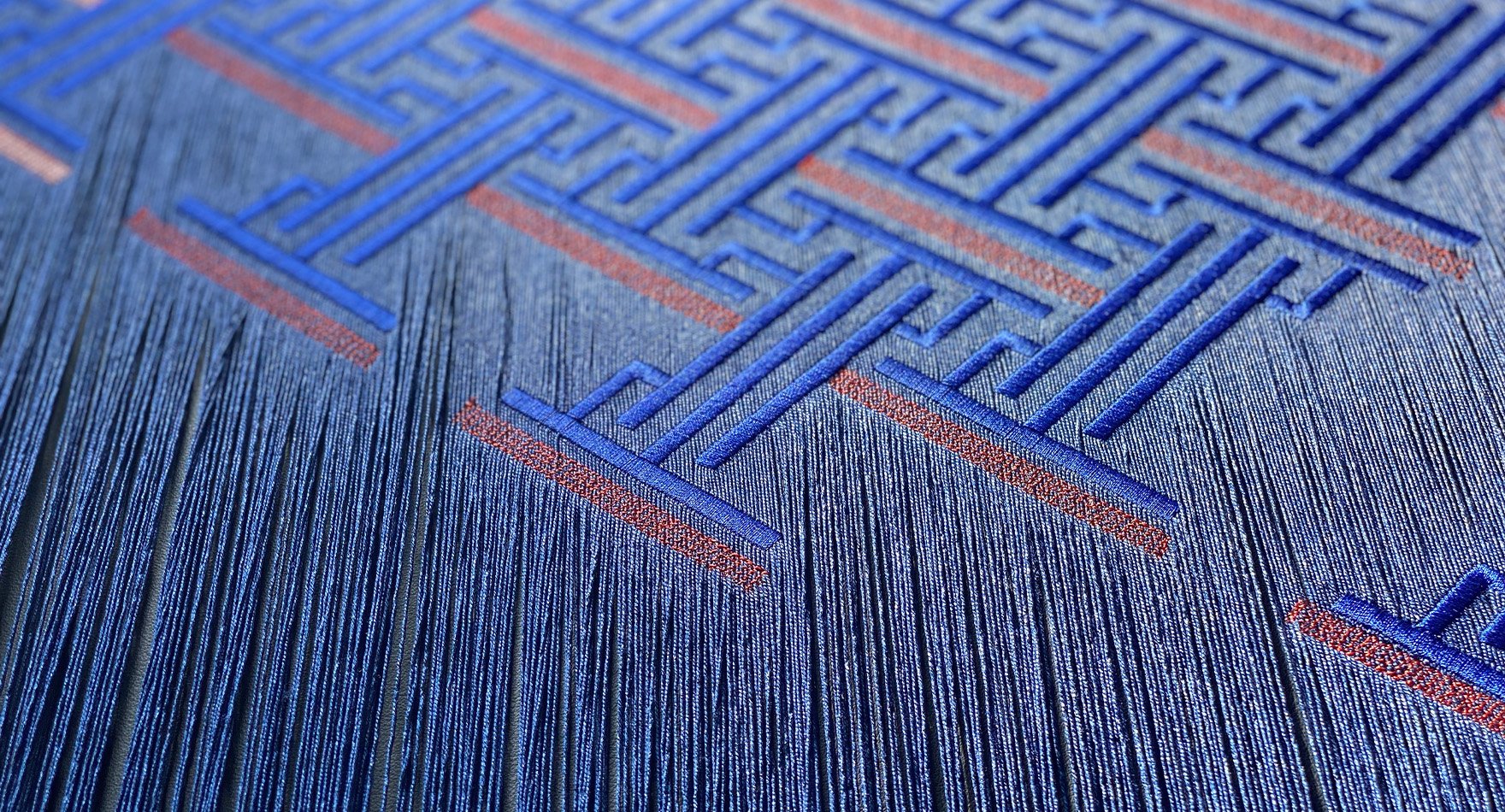
YOUR WORKS TAKE TIME TO MAKE. MANY ASPECTS OF CONTEMPORARY LIFE EMPHASISE GETTING THINGS DONE AS QUICKLY AS POSSIBLE, OFTEN SACRIFICING QUALITY IN THAT PROCESS. HOW DO YOU CONSIDER TIME IN YOUR PRACTICE?
It is definitely freeing now having organisations or end clients that appreciate that things take this long, and are specifically wanting to work with you because they understand the specialised nature of the work.
EMBROIDERY AND NEEDLEWORK HAVE BEEN THOUGHT OF AS FEMININE CRAFTS. DO YOU FEEL YOURSELF CONTINUING OR RESISTING THIS LINEAGE?
I think textile crafts get dismissed as women’s work, because they began as household work and women are the backbone of the household, but the communities using techniques like Jamdani or aari embroidery are often male-dominated. It depends on the specific craft and social fabric, but in either case, there’s a great deal of power and resistance in being soft, in physically connecting fabric and passing on its lineage.

WALK US THROUGH YOUR PROCESS FOR HOW YOU’D APPROACH A BESPOKE COMMISSIONFOR A CLIENT.
It begins with understanding the scale and space they want the piece to live in, along with considering how a client moves through their space and what they want the work to hold, whether that’s calmness, energy or as a focal point of reflection. From there, I translate those ideas into drawings, making quick hand sketches and refining them into motifs. Often, I map each stitch and material to scale. Material selection is crucial: materials like silk, organza and sometimes unexpected textiles like leather are chosen for their interaction with light and space. I want to show the function of the material, not just its decorative quality. I then build on the surface using a combination of methods, some done by hand, some done digitally.
LOOKING FORWARD, WHAT ROLE DO YOU SEE FOR EMBROIDERY AND TEXTILE CRAFT IN HOW PEOPLE CREATE MEANING IN THEIR HOMES?
Embroidery is accumulative, built through hours of attention. In a home, that kind of slowness and tactility matters. It creates a counterpoint to disposability, inviting a pause that holds time. Looking ahead, I see textile craft becoming integral to how we define value and hold memory in our domestic spaces.
/Pen-2026-Gifting-Candle-3x4-2-.jpg)

/2026-Notes-On-House-D2C-Blog-Thumbnail-1336x1924px-05-1-.jpg)
