


SEWING SEEDS
MEET THE TRIO OF SAVILE ROW APPRENTICES READY TO DRESS THE NEXT GENERATION IN FINE BRITISH TAILORING

Published 426 days ago
12 min read
In 2007, a group of tailors came together to create The Savile Row Bespoke Association, which requires its members to train one salaried apprentice. Here’s some of the new talent on the Row.
ANASTASIA INOZEMTSEVA
HOW DO YOU APPROACH THE TRADITION OF TAILORING ALONGSIDE TODAY'S CUSTOMER NEEDS?
I like creating something that has a balance of traditional tailoring and something more casual. I try to make pieces that feel wearable and versatile, easy to dress up or down, something you can wear with trainers and still look elegant and put-together. I feel there’s still a lot of customers looking for that classic, traditional look and I respect that, but I also think there’s room to explore a more streetwear-inspired tailoring style, maybe with bolder colours, interesting cloth textures or softer constructions.
WHAT UNUSUAL PLACES DO YOU SEEK INSPIRATION?
Most of it comes from my phone’s photo gallery! Before I got into tailoring, I was really interested in cinematography, so I got into the habit of taking photos of anything visually striking I came across – colour combinations, shapes, lighting, textures. I still do that constantly. It’s often not about a full look, but a detail or a mood I want to recreate.
WHAT IS UNIQUE ABOUT RICHARD JAMES?
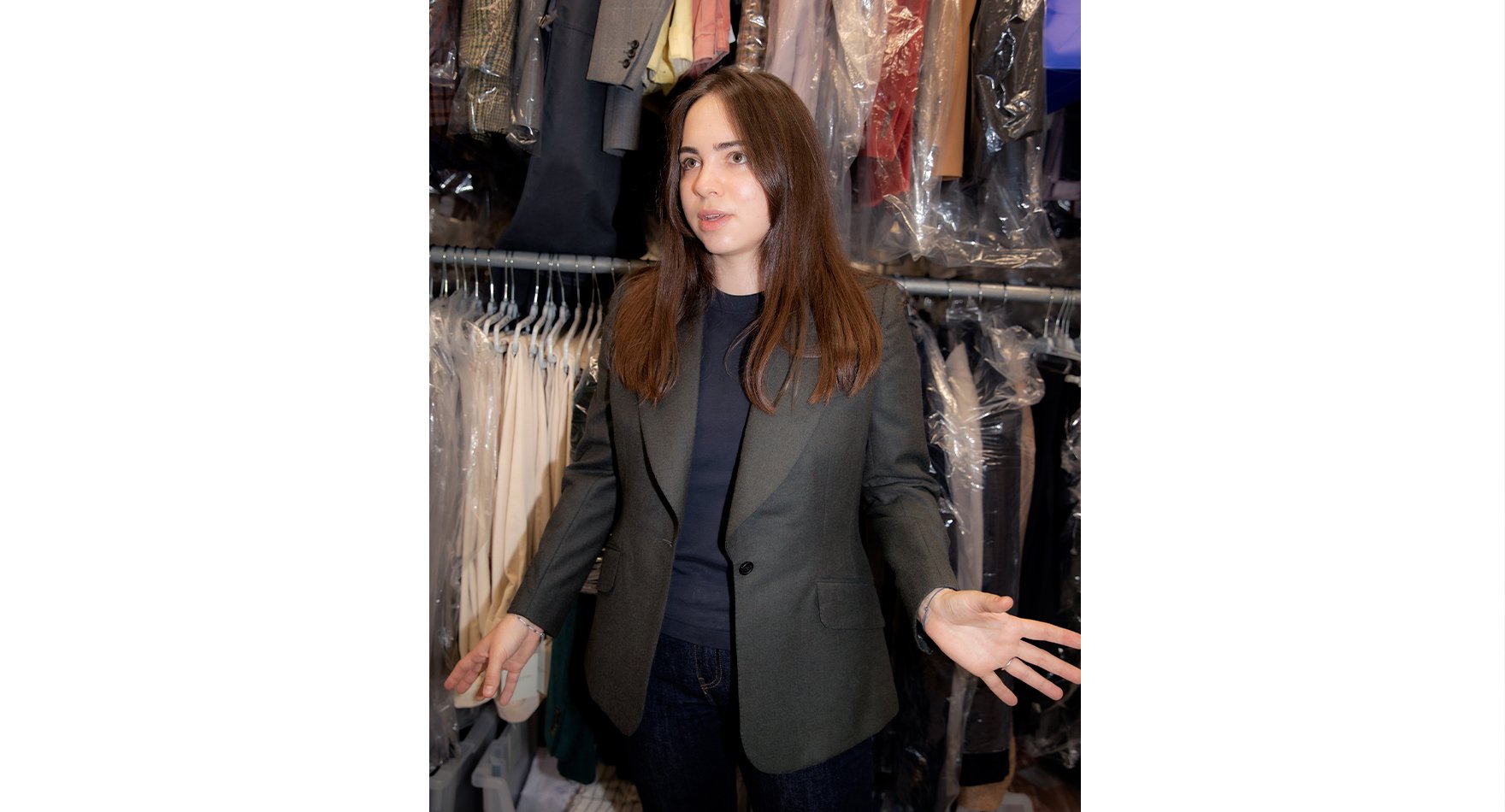
Richard James is the only bespoke Savile Row tailor who has received the British Fashion Council’s Menswear Designer of the Year award. I would say they are more design-led when it comes to classic tailoring and menswear than some other tailors. They are not afraid to experiment with colour and be playful – they have quite a fun and fresh energy that I try to reflect in my garments, too.
A SUIT OF YOURS IS CURRENTLY IN THE WINDOW OF RICHARD JAMES: A TWO-PIECE BURGUNDY WOMEN’S SUIT WITH A CONTRASTING TWEED CAPE AND BUCKET HAT. TELL US ABOUT IT.
That piece was made for the Golden Shears competition. I started working on it in the autumn, with the final show set for spring, so I wanted to create something that would carry through those “transitional seasons” – light enough to wear on warmer days, but with an extra layer for when it gets colder. That’s where the cape came in. I’d never made one before, and I’m always trying to push myself technically, so it felt like the right challenge.
The starting point was the cloth for the cape. I bought it a few years ago because I loved the colour palette, but I didn’t find the right project for it then. It has a bold check, and one detail I was quite particular about was making sure the pattern was mirrored on the front and on the back pieces. The cloth wasn’t mirrored if folded in half, so I had to cut half the cape using the right side of the fabric and the other half using the wrong side, something that took me more time than I expected – but I was happy with the result. I also decided to experiment with the jacket’s canvas construction. It’s quite lightweight, but it extends into the side body, which is something more commonly done in women’s tailoring than men’s. I wanted that added support through the side to create a stronger flare in the silhouette.
OLIVER REEVES
HOW DID YOU MAKE YOUR WAY TO SAVILE ROW?
My tailoring career started at Newham College on their basic tailoring course. During that time, I started knocking on doors looking for work experience at the tailoring houses along Savile Row, and that led to placements at Anderson & Sheppard, Richard Anderson and Thom Sweeney. I was taken on full-time as a coat-making apprentice at Thom Sweeney, and I worked there for seven years before starting at Gieves & Hawkes as an undercutter, training under the direction of head cutter Davide Taub.
WHAT INSPIRES YOU FROM THE ARCHIVES AT GIEVES & HAWKES?
When I first got into tailoring, making a peacoat was a major goal of mine. Peacoats, reefer jackets and military uniforms are a staple in the Gieves & Hawkes archive, as we are traditionally a naval tailor, and being able to reference examples of those styles from our rich history is incredibly special when creating my own outerwear.
WHAT DEFINES GIEVES & HAWKES' APPROACH TO TAILORING?
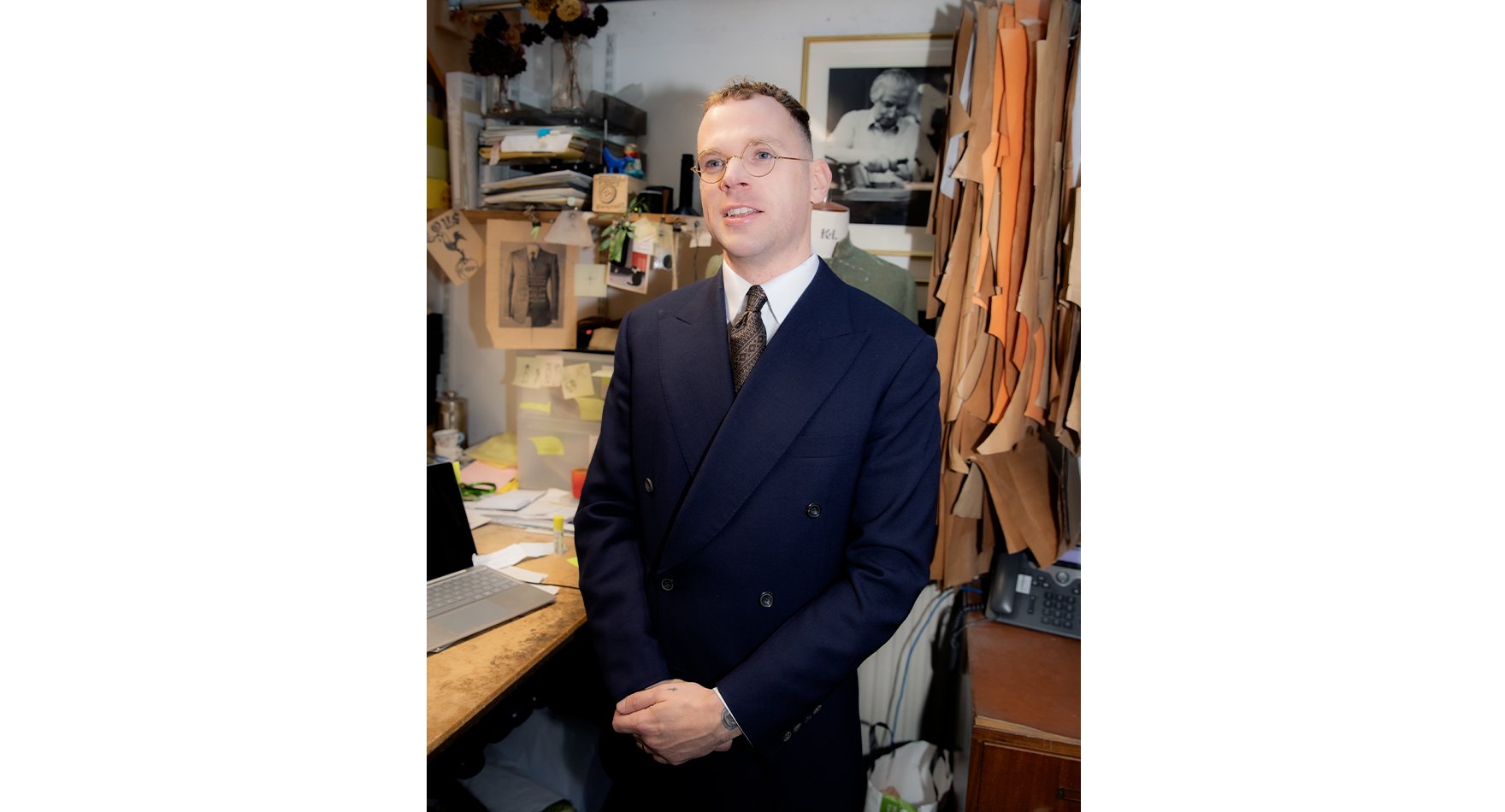
Although we use classic tailoring techniques, we prioritise creative design over a strict “house style”. We aim to accommodate the modern wearer who wants more flexibility in their wardrobe: garments that are versatile enough to be worn at the office and easily dressed up or down for dinner or a more formal event. Creating garments with an enduring style and a fit that speaks for itself is the ultimate goal.
IS THERE A SPECIALISM THAT YOU ARE INTERESTED IN, OR DO YOU TAKE A HOLISTIC VIEW?
It was always my intention to be able to cut and make everything – waistcoats, trousers and coats. Having said that, I am most passionate about outerwear. I love the variety of garments, from a casual Harrington jacket to an impressive greatcoat. Whatever outerwear you choose, it can really make a statement and define your personal style. WHAT IS EXCITING ABOUT THE CURRENT MOMENT FOR TAILORING? It’s always exciting when new cloths are released by the various cloth merchants we work with. There is always something that sparks fresh ideas – it could be a modern take on a classic garment or an entirely original piece.
JOANNA SPREADBURY
YOU’VE JUST WON THE GOLDEN SHEARS AWARD WITH AN ELECTRIC BLUE, DOUBLE-BREASTED SUIT. WHAT INSPIRED IT, AND WHAT DOES IT EXPRESS ABOUT YOUR APPROACH?
I cycle to work every day, so I see people walking to work in their suits as I go past the West End galleries. The suit was born from wanting to create a piece of art in and of itself – something that caught attention without shouting, and wouldn’t look out of place in a gallery around the corner from here. I was so excited to have the opportunity to work with other teams in Huntsman, and get advice from the cutting team and trouser-makers. It meant I could push my skillset forward massively and draw from the knowledge of exceptional tailors all around me, in order to create something unusual and exciting.
HOW DID YOU COME TO SAVILE ROW?
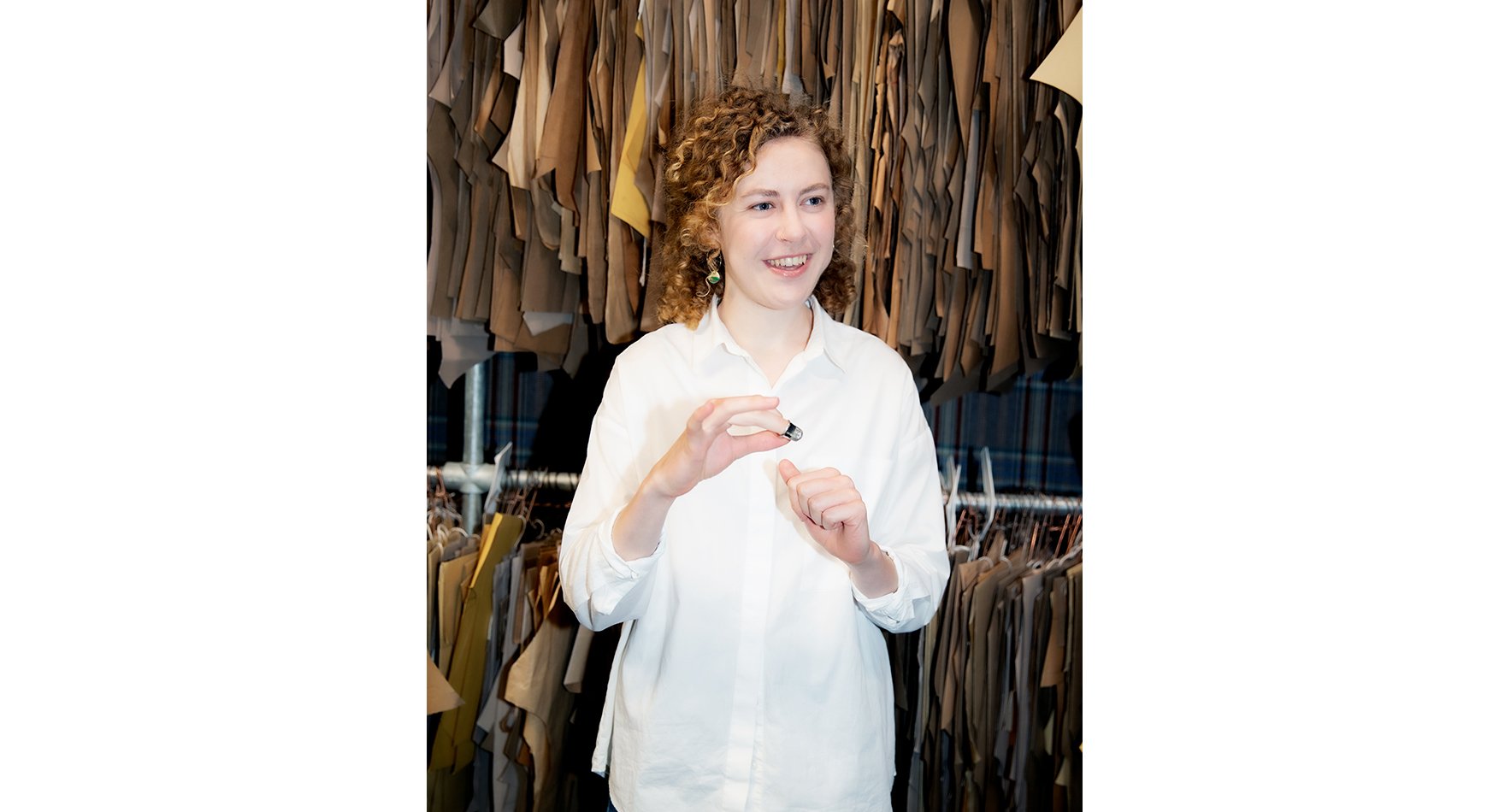
I taught beginner sewing classes alongside my university studies, and after a couple of years I decided I wanted to learn how to sew professionally. I walked up and down Savile Row with my CV and met people all along the street who were happy to share their skills and time with me. It took a while, especially over COVID-19, but later I was contacted by Huntsman to become their trimmer, an in-house haberdashery for canvases and trimmings. I have been here ever since!
IN WHAT UNUSUAL PLACES DO YOU SEEK INSPIRATION?
This is a hard question! Texture is important to me: the feel of a brick wall as you run your hand along it, or the ripples on water as they disperse and disappear. For the suit, this translated to my choice of cloth and the folded elements of the trousers and coat pocket flaps. The cloth looks cobalt blue, but within its weave there are threads of purple, midnight and black, which gives it a rich depth. The folds that run the length of each leg lie gently over each other, opening as the wearer moves and returning to their position when still.
WHY DID YOU JOIN HUNTSMAN?
Huntsman is one of the oldest and largest firms on Savile Row, so I'd heard of them long before I arrived. It caught my eye because of its elegant house style, as well as the diversity of the pieces made in-house. We work with all types of garments, from formal dresswear like morning coats to shooting wear to sports jackets made from bamboo fibres. I also really like that we do womenswear.
Photography of Anastasia Inozemtseva, Oliver Reeves and Joanna Spreadbury by Freddie Payne.


